

The income summary is a temporary account used to make closing entries. To close expenses, we simply credit the expense accounts and debit Income Summary. Temporary accounts include all revenue and expense accounts, and also withdrawal accounts of owner/s in the case of sole proprietorships and partnerships (dividends for corporations).
- To close that, we debit Service Revenue for the full amount and credit Income Summary for the same.
- The third entry requires Income Summary to close to the Retained Earnings account.
- This gives you the balance to compare to the income statement, and allows you to double check that all income statement accounts are closed and have correct amounts.
- A credit balance in the Income Summary account signifies net income.
- A closing entry is a journal entry that’s made at the end of the accounting period that a business elects to use.
Recording a Closing Entry

The income summary account functions as an intermediary account within the accounting cycle, specifically during the creation of closing entries. Its primary purpose is to help reset temporary accounts, such as revenues and expenses, to a zero balance at the conclusion of an accounting period. This zeroing out prepares these accounts for the recording of the income summary account is used to transactions in the subsequent period.
Financial and Managerial Accounting
- It works as a checkpoint and mitigates errors in preparing financial statements by directly transferring the balance from revenue and expense accounts.
- You should recall from your previous material that retained earnings are the earnings retained by the company over time—not cash flow but earnings.
- This is the same figure found on the statement of retained earnings.
- Closing, or clearing the balances, means returning the account to a zero balance.
- The income summary account is classified as a temporary, or nominal, account.
- The net amount transferred into the income summary account equals the net profit or net loss that the business incurred during the period.
This resetting allows businesses to measure financial performance for the next period, preventing the mixing of results from different periods. Without closing them, accumulated balances would inaccurately represent performance in subsequent periods. The first step involves transferring all individual revenue account balances into the Income Summary.

Step 1: Close all income accounts to Income Summary
- This process ensures each new accounting period begins with a clean slate for revenue and expense tracking, allowing for accurate financial reporting and comparison across periods.
- The closing entries are the last journal entries that get posted to the ledger.
- The information needed to prepare closing entries comes from the adjusted trial balance.
- The accountant then needs to make a debit of $5,000 from the drawings account and a credit of the same amount to the capital account.
- Choose CFI for unparalleled industry expertise and hands-on learning that prepares you for real-world success.
- What are your total expenses for rent, electricity, cable and internet, gas, and food for the current year?
This account acts as an intermediary step, facilitating the accurate transfer of financial performance results to the company’s long-term equity accounts. By centralizing these temporary balances, it helps prepare accounting records for a new financial cycle. It also streamlines the process of “closing the books,” making it easier to determine and record a business’s profitability over a defined timeframe. The income summary Bookkeeping vs. Accounting account simplifies determining a company’s net income or net loss for the period. Instead of transferring individual revenue and expense balances directly to a permanent equity account, it gathers them into one place. If revenues exceed expenses, the account shows a credit balance, indicating a net profit.

What Is a Recast in Accounting and Finance?
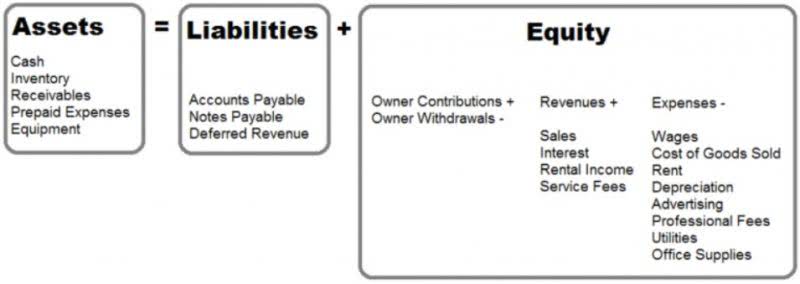
This ensures https://skywing168.com/accounting-services-for-social-media-influencers-2/ that the financial activity of one period does not mix with that of the next. The income summary account acts as a clearing account for these transfers. The income summary account facilitates preparing financial statements for subsequent periods. By resetting revenue and expense accounts to zero, it prevents commingling financial data across reporting cycles.